
Elite athletes often think about breast augmentation differently than the average patient. They may want to restore breast volume, improve proportion, or feel more feminine without creating a result that looks disconnected from a highly trained physique.
Just as importantly, they do not want breast surgery to compromise the strength, movement, and physical capability they have worked so hard to build.
For these women, breast augmentation should not begin with the question, “How large do you want to go?” It should begin with a careful evaluation of the athlete’s anatomy, sport, training demands, chest musculature, body composition, and long-term goals.
Small breast implants and muscle-sparing techniques, such as subfascial implant placement, may allow the right athlete to achieve a refined enhancement while preserving the pectoralis muscle.
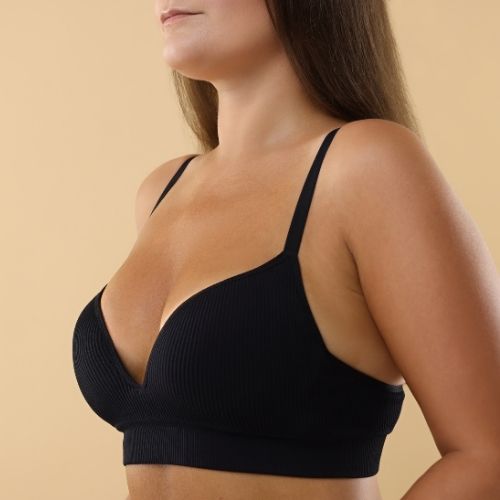
Athletes Have Different Breast Augmentation Priorities
A competitive athlete’s body is not merely an aesthetic consideration. It is central to how she trains, performs, competes, and moves through the world.
Strength athletes, swimmers, climbers, gymnasts, CrossFit competitors, fighters, dancers, and other highly active women may repeatedly engage their chests, shoulders, backs, and arms. Some also maintain lower levels of body fat, making implant selection and tissue coverage particularly important.
Athletes considering breast augmentation may be concerned about:
- Preserving chest and upper-body function
- Avoiding visible implant movement when the pectoral muscles contract
- Maintaining a balanced, athletic silhouette
- Limiting unnecessary disruption of healthy muscle
- Returning safely to training
- Preventing implants from looking excessively round, heavy, or artificial
- Choosing a result that works with both performance clothing and everyday clothing
These concerns should be part of the surgical plan from the beginning rather than treated as an afterthought.
Why Smaller Implants Often Work Well for Athletic Women
A smaller implant does not necessarily mean an insignificant result. On a lean or highly athletic frame, a relatively modest change can make a substantial difference in shape and proportion.
The goal may be to restore volume that was lost during intense training, weight changes, or natural breast development. Some athletes primarily want greater balance between the chest, shoulders, and hips. Others want clothing and swimwear to fit better without looking obviously augmented.
Selecting a more conservative implant can help Dr. Xu create:
- Natural fullness that complements muscular definition
- A softer transition between the chest and breast
- Proportion without overwhelming a smaller frame
- Less unnecessary weight and volume on the breast tissues
- A result that remains comfortable during an active lifestyle
Implant selection is not based on volume alone. Width, profile, projection, breast tissue, skin quality, chest-wall shape, and the athlete’s overall proportions all matter. A carefully selected smaller implant may produce a more attractive result than simply choosing the largest implant the tissues can accommodate.
What Is Subfascial Breast Augmentation?
Subfascial breast augmentation places the implant above the pectoralis major muscle but beneath the thin fascial layer that covers it. It is sometimes discussed more broadly as a prepectoral or muscle-sparing approach.
The most important distinction for athletes is that the implant is not placed underneath the chest muscle. Dr. Xu does not need to cut, detach, or release the pectoralis muscle to create the implant pocket.
By comparison, traditional submuscular and dual-plane techniques place at least part of the implant beneath the pectoralis. Creating that pocket generally requires elevating the muscle and releasing some of its lower attachments.
Submuscular placement remains an appropriate option for many women and does not automatically lead to permanent strength loss. However, an athlete who depends heavily on her pectoral muscles may reasonably prefer an approach that leaves the muscle undisturbed when her anatomy allows it.
Why Leaving the Pectoralis Muscle Intact Matters
The pectoralis major plays a role in pushing, pulling, climbing, pressing, swimming, throwing, grappling, and stabilizing the upper body. For athletes who train these movements repeatedly, preserving normal muscle anatomy may be an important surgical priority.
A muscle-sparing approach may offer several potential advantages.
- The Implant Does Not Sit Beneath an Actively Contracting Muscle
When an implant is positioned under the pectoralis muscle, muscle contraction can compress or move it. This may cause the breast to temporarily flatten, shift, or change shape during exercises such as push-ups, bench presses, chest fly movements, or certain poses.
This effect is commonly called breast animation deformity. Its severity varies, and some women barely notice it. For a physique athlete or anyone whose chest is frequently visible while flexing, however, even moderate movement may be distracting.
Since a subfascial implant sits in front of the muscle, pectoral contraction does not act directly on the implant in the same way. This can substantially reduce the risk of muscle-driven distortion during training or competition.
- Healthy Muscle Is Not Surgically Released
Athletes often spend years developing coordination, strength, and confidence in their bodies. When appropriate, there is value in leaving healthy, functional muscle alone.
Subfascial placement allows the breast to be augmented without cutting or detaching the pectoralis muscle. Although every operation involves healing and temporary activity restrictions, the surgery itself is focused on creating the implant pocket without altering the athlete’s chest muscle anatomy.
- The Result May Feel More Integrated With an Athletic Body
For many athletic women, the best breast augmentation does not hide their musculature or compete with it. It adds shape while keeping the shoulders, chest, waist, and back visually connected.
A smaller implant placed above an intact muscle can provide controlled fullness without creating the impression that the implant is being pushed upward or outward when the athlete flexes.
Does Subfascial Placement Look Natural on a Lean Athlete?
It can, but patient selection is extremely important.
Athletes with low body fat may also have relatively little natural breast tissue covering an implant. If the tissues are too thin, above-the-muscle placement may make implant edges, rippling, or contour irregularities more visible.
Dr. Xu evaluates several factors before recommending a subfascial approach, including:
- The thickness of the existing breast tissue
- Skin quality and elasticity
- The amount of natural breast volume
- Chest width and rib-cage shape
- Implant size, profile, and cohesivity
- The location and development of the pectoralis muscle
- The athlete’s usual training weight and competition weight
- The likelihood of future weight fluctuations
For some lean athletes, conservative implant sizing provides enough enhancement without placing excessive demands on thin tissues. In selected cases, fat transfer may also be discussed to soften implant edges or improve coverage. Other women may be better served by a different implant plane.
The right approach is the one that respects both the patient’s athletic priorities and the realities of her anatomy.
Breast Augmentation for Athletes Should Not Be Planned Around Cup Size Alone
Cup sizes are inconsistent between bra manufacturers and do not provide enough information to plan surgery. This is especially true for athletes, whose chest circumference, shoulder development, and torso proportions may differ from those of non-athletic women.
Rather than promising a specific cup size, Dr. Xu considers how the breast will fit with the rest of the body.
A successful result should look balanced:
- At rest and in motion
- In athletic clothing and regular clothing
- During the competitive season and outside of it
- From the front, side, and three-quarter view
- With the athlete’s natural chest and shoulder development
- The implant should become part of the body’s overall proportion rather than the first thing someone notices.
- Returning to Training After Breast Augmentation
Even with a muscle-sparing technique, breast augmentation is still surgery. Athletes must be willing to temporarily step away from intense training so the incision, implant pocket, and surrounding tissues can heal.
Returning too quickly may increase swelling, discomfort, bleeding, implant displacement, or problems with the incision. Fitness does not make someone exempt from the biological requirements of healing.
Dr. Xu will create a personalized recovery plan based on the operation and the athlete’s sport. Return to activity is generally progressive. Walking and gentle lower-body movement may resume before running, jumping, heavy lifting, contact training, or chest-intensive exercise.
An athlete’s recovery plan may account for:
- Competition and training schedules
- Upper-body loading
- Repetitive overhead movement
- Impact and contact
- Compression from equipment or uniforms
- Sports-bra support
- Travel for events
- Nutrition and recovery habits
The goal is to return safely, preserve the result, and rebuild confidence in movement without unnecessary setbacks.
Are Breast Implants Right for Every Elite Athlete?
No. Breast augmentation should be considered carefully by anyone whose career, scholarship, income, or identity is closely tied to physical performance.
A good candidate is generally someone who:
- Is in good overall health
- Has realistic expectations about surgery and recovery
- Wants a subtle or proportionate enhancement
- Is willing to modify training during recovery
- Maintains a reasonably stable weight
- Understands that breast implants are not lifetime devices
- Accepts the possibility of future imaging or additional surgery
- Is making the decision for herself
Timing also matters. Scheduling surgery immediately before a competitive season may not allow enough time for healing and a controlled return to full training. When possible, surgery should be coordinated around an appropriate off-season or lower-intensity training period.
Breast Implant Safety and Long-Term Planning
Athletes should understand that a muscle-sparing technique does not eliminate the general risks associated with breast implants.
Potential complications include infection, bleeding, changes in sensation, scarring, asymmetry, implant malposition, capsular contracture, rippling, rupture, and the need for future surgery. Breast implants are medical devices and are not expected to last forever.
Patients should also understand the monitoring recommendations associated with their chosen implant. Dr. Xu will discuss implant type, manufacturer information, long-term imaging, symptoms that should be evaluated, and how implants may affect future breast screening.
A thoughtful surgical plan considers not only the athlete’s next event, but also her health, body, and goals over many years.
Why Choose Dr. Xu for Athlete Breast Augmentation Surgery?
Dr. Ginger Xu is a board-certified, Ivy League-trained plastic surgeon known for her refined aesthetic eye, meticulous attention to detail, and deeply personalized approach to care. Many women seeking breast augmentation today are not looking for dramatic change but rather subtle enhancement that feels elegant, proportional, and natural to their body.
Her philosophy aligns closely with what many patients describe as “Bay Area Beauty,” a softer, more understated aesthetic that prioritizes balance and authenticity over an overly augmented appearance. Dr. Xu especially appreciates the concept of “small breast beauty,” where enhancement is designed to complement a woman’s natural frame rather than overpower it. Her focus is on creating results that feel feminine, refined, athletic, and believable.
Dr. Xu is also one of the few board-certified plastic surgeons on the West Coast to complete the prestigious Harvard Aesthetic Plastic Surgery Fellowship, an elite program that accepts only one applicant each year. Her advanced training and thoughtful aesthetic philosophy have made her a trusted choice for natural-looking breast augmentation in San Francisco.
A Personalized Approach to Breast Augmentation in San Francisco
Every patient’s journey is unique, and we feel privileged to be a part of it. Together, you and Dr. Xu will chart a path that celebrates individuality, empowerment, and true beauty. If you are ready to begin your aesthetic journey, we invite you to contact Ethos Plastic Surgery online to schedule your consultation today.
Athlete Breast Augmentation Surgery – FAQs
Can I continue bench pressing after breast augmentation?
Most women can eventually return to chest exercises after they have healed and received clearance from their surgeon. You will need to avoid bench pressing and other strenuous upper-body movements during the initial recovery period. Dr. Xu will guide your return based on how your tissues are healing rather than using your usual fitness level as the only measure of readiness.
Will breast implants reduce my chest strength?
Breast implants do not automatically cause permanent loss of chest strength. However, implant placement and surgical technique matter. A subfascial approach leaves the pectoralis muscle intact, which may be especially appealing to athletes who want to avoid unnecessary alteration of a heavily trained muscle.
What is breast animation deformity?
Breast animation deformity is a visible change in breast shape or implant position when the pectoralis muscle contracts. It is associated primarily with implants placed partially or fully beneath the chest muscle. The implant may shift, flatten, or appear distorted during flexing or chest-intensive exercise.
Are smaller implants better for runners and endurance athletes?
Smaller implants may feel more proportional and less cumbersome for some runners, cyclists, triathletes, and endurance athletes, but there is no single ideal size. The best implant depends on your chest width, breast tissues, body proportions, support needs, and aesthetic goals.
Can a bodybuilder have implants placed above the muscle?
Possibly. Above-the-muscle or subfascial placement can help avoid implant movement caused by pectoral contraction. However, bodybuilders often have very low body fat and limited breast tissue, which may increase the risk of visible implant edges or rippling. Dr. Xu must evaluate whether you have enough tissue coverage for this approach.
Will I still be able to compete after breast augmentation?
Breast augmentation does not necessarily prevent an athlete from returning to competition. The important factors are selecting an appropriate technique, allowing adequate time for recovery, and returning to training gradually. Surgery should ideally be coordinated around your competitive calendar.